Master Hand
The Master Hand is one of the Nine Masters of Roke, the gentle and light-hearted old teacher of illusion and the lesser arts of Changing at the School for Wizards, who instructs Ged in the fundamental distinction between mere seeming and true transformation, and who warns him that the world is in balance and that to light a candle is to cast a shadow.
Identity and Role
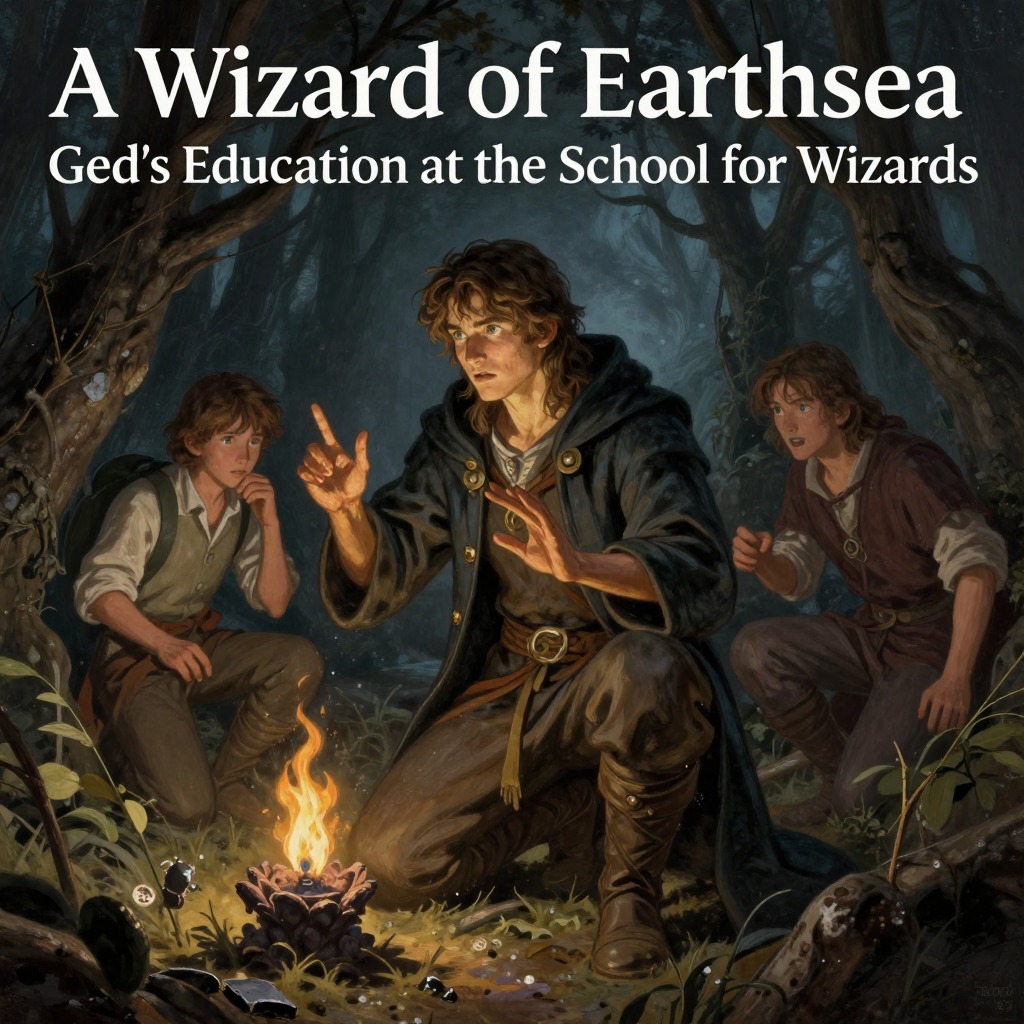
The Master Hand taught sleight and jugglery and the lesser arts of Changing to the prentices of the Great House of Roke. He was a gentle and light-hearted old man, who had endless delight in the wit and beauty of the crafts he taught. Ged soon felt no awe of him, but asked him for this spell and that spell, and always the Master smiled and showed him what he wanted. The Master Hand worked in the Court of Seeming, where illusions were practiced.
The Lesson of the Pebble
One day, having it in mind to put Jasper to shame at last, Ged said to the Master Hand in the Court of Seeming, "Sir, all these charms are much the same; knowing one, you know them all. And as soon as the spell-weaving ceases, the illusion vanishes. Now if I make a pebble into a diamond"—and he did so with a word and a flick of his wrist—"what must I do to make that diamond remain diamond? How is the changing-spell locked, and made to last?" The Master Hand looked at the jewel that glittered on Ged's palm, bright as the prize of a dragon's hoard. The old Master murmured one word, "Tolk," and there lay the pebble, no jewel but a rough grey bit of rock. The Master took it and held it out on his own hand. "This is a rock; tolk in the True Speech," he said, looking mildly up at Ged now. "A bit of the stone of which Roke Isle is made, a little bit of the dry land on which men live. It is itself. It is part of the world. By the Illusion-Change you can make it look like a diamond—or a flower or a fly or an eye or a flame—" The rock flickered from shape to shape as he named them, and returned to rock. "But that is mere seeming. Illusion fools the beholder's senses; it makes him see and hear and feel that the thing is changed. But it does not change the thing. To change this rock into a jewel, you must change its true name. And to do that, my son, even to so small a scrap of the world, is to change the world. It can be done. Indeed it can be done. It is the art of the Master Changer, and you will learn it, when you are ready to learn it. But you must not change one thing, one pebble, one grain of sand, until you know what good and evil will follow on that act. The world is in balance, in Equilibrium. A wizard's power of Changing and of Summoning can shake the balance of the world. It is dangerous, that power. It is most perilous. It must follow knowledge, and serve need. To light a candle is to cast a shadow . . ." He looked down at the pebble again. "A rock is a good thing, too, you know," he said, speaking less gravely. "If the Isles of Earthsea were all made of diamond, we'd lead a hard life here. Enjoy illusions, lad, and let the rocks be rocks." He smiled, but Ged left dissatisfied.
Thematic Significance
The Master Hand's lesson articulates the core ethical principle of wizardry in Earthsea: that true magic, which changes the true name of a thing, alters the world itself and must therefore be undertaken only with knowledge of the consequences and in service of genuine need. His warning that "to light a candle is to cast a shadow" foreshadows the central crisis of Ged's youth, when his pride and desire to prove himself lead him to summon a shadow he cannot control. The Master Hand's gentle, smiling demeanor contrasts with the gravity of his teaching, and his refusal to give Ged the dangerous knowledge he seeks until he is ready reflects the wisdom of the Masters of Roke, who understand that power without discipline is ruin. Ged's dissatisfaction with the lesson, his desire to press a mage for his secrets, marks his immaturity and his failure to grasp the balance that the Master Hand so carefully explains.